What is a supernova? It is what happens when a star runs out of options. In the space of a few seconds, a single star releases more energy than our Sun will emit over its entire 10-billion-year life. For a few weeks, one dying star can outshine an entire galaxy of a hundred billion stars.
It is violent, it is spectacular, and it is the reason you exist — we will get to that part.
The Two Main Kinds
| Type | What blows up | What triggers it | What is left |
|---|---|---|---|
| Type Ia | A white dwarf in a binary system | It steals matter from a companion until it passes a critical mass, then detonates | Usually nothing — total disruption |
| Type II (core-collapse) | A massive star, 8+ solar masses | Its core runs out of fuel and collapses in about a second, then rebounds | Neutron star or black hole |
Type Ia: The Theft Gone Wrong
A white dwarf is the dead, dense remnant of a sun-like star — roughly Earth-sized but holding about as much mass as the Sun. Normally it just sits there cooling for eternity.
But if that white dwarf has a companion star, it can siphon gas off it. Material piles onto the surface, gets hotter and denser, until the whole thing crosses a threshold (about 1.4 solar masses, the Chandrasekhar limit). At that point carbon fusion ignites essentially everywhere at once. There is no gradual burn — the entire star detonates in seconds.
Because this always happens at nearly the same mass, Type Ia supernovae always release nearly the same amount of light. That makes them “standard candles”: measure how bright one looks from Earth, and you know exactly how far away it is. This is how we discovered the universe’s expansion is accelerating.
Type II: The Core Gives Up
Massive stars live fast and burn through their fuel in layers, like an onion: hydrogen on the outside, then helium, then carbon, then heavier elements, all the way to iron in the core.
Iron is the dead end. Fusing iron consumes energy instead of releasing it. The moment a star builds a substantial iron core, the outward pressure that has held it up for millions of years simply switches off.
What follows is absurdly fast. The core collapses from something the size of Earth down to a city-sized ball in about a second — a quarter of the speed of light. It hits nuclear density, stiffens, and the infalling outer layers slam into it and bounce. That rebound, plus a colossal flood of neutrinos, tears the rest of the star apart.
What Survives
If the leftover core is between about 1.4 and 3 solar masses, it becomes a neutron star — a city-sized object so dense that a teaspoon of it would weigh about a billion tons. Some spin hundreds of times per second and beam radio waves at us; we call those pulsars.
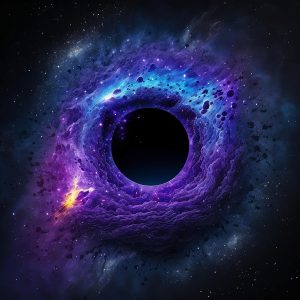
Above roughly 3 solar masses, nothing can hold it up. It collapses all the way to a black hole.
Why You Are Made of Supernova Debris
This is the part worth remembering. The Big Bang produced essentially hydrogen, helium, and a trace of lithium. That is it. Every heavier element — the carbon in your cells, the nitrogen in your DNA, the calcium in your bones, the iron in your blood — was forged inside stars and scattered by their deaths.
A core-collapse supernova does not just fling out the star’s outer layers; the explosion itself creates the extreme conditions needed to build the heaviest elements. The gold in jewelry almost certainly came from merging neutron stars, a close cousin of the same process.
So when someone says we are made of stardust, that is not poetry. It is a statement with a specific mechanism, and the mechanism is supernovae.
Has One Ever Happened Near Us?
Yes, and often enough that we have records. Chinese astronomers logged a “guest star” bright enough to see in daylight in 1054 CE — that was the supernova that created the Crab Nebula. Kepler’s supernova in 1604 was visible with the naked eye for weeks. In 1987, a supernova in the Large Magellanic Cloud was close enough that detectors on Earth caught the neutrino burst before the light arrived.
No supernova in our galaxy has been observed with the naked eye since 1604. Statistically we are overdue. The main candidates — Betelgeuse and Antares — are close enough to be spectacular but nowhere near close enough to harm us. You need to be within roughly 50 light-years for real damage, and no known candidate is anywhere near that.
So what is a supernova in one line? A star failing to hold itself up, and succeeding spectacularly.
Keep Exploring
- How big is the Sun? — and why it will never go supernova
- What is dark energy? — discovered using exploding stars
- What is a black hole? — one possible ending