Every homeschool year starts the same way. Somebody posts a list of forty-two apps. You sign up for the free trials. Six weeks later you are paying for four subscriptions and opening two.
The problem is not that the tools are bad. It is that most of them are answering the same question — how do I deliver a lesson — and a family only needs one answer to that. What a family actually needs from software is narrower and more specific: something that does a job you cannot do yourself.
That is the test. A tool earns a renewal when it does something a book, a kitchen and a parent cannot. Everything else is a supplement that will feel optional by February.
Here are five that pass, organised by the job they do, and three categories where families most often pay for something they already have.
Before the list: the renewal test
Three questions, asked in this order. A tool has to survive all three.
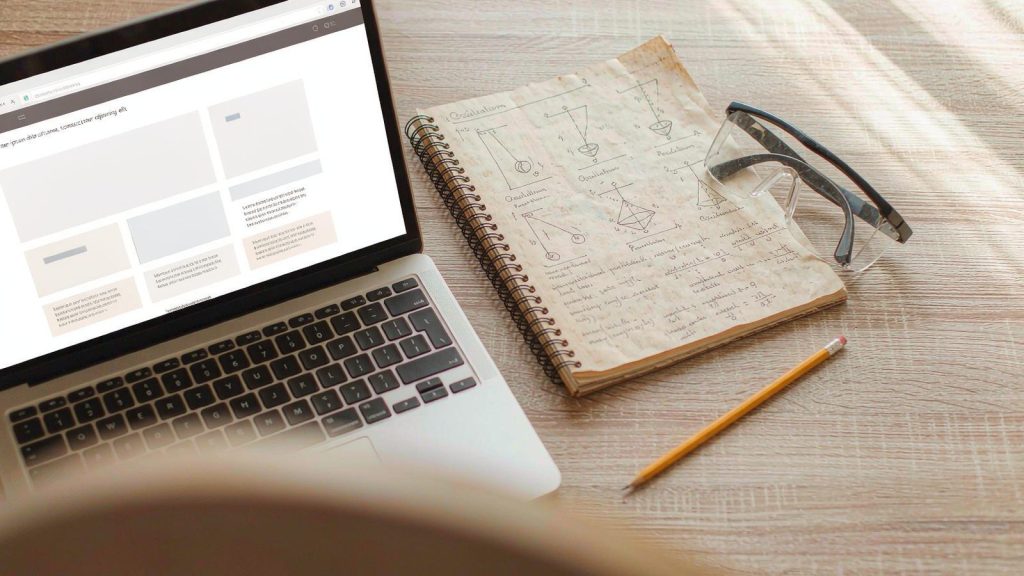
1. Does it do something you cannot? A printable worksheet site fails this. A physics simulation of a pendulum swinging in a vacuum passes it, because you cannot build a vacuum in your kitchen.
2. Will you use it in week thirty, not week three? Most tools are brilliant for the first fortnight because they are new. The question is whether the tool is load-bearing — whether removing it would break something in your week.
3. Does it reduce your work, or add a dashboard? Parent dashboards are the most common form of homework that software gives you. If a tool generates reports you feel obliged to read, that is a cost, not a feature.
A tool that fails question 1 will fail question 2 within a term.
1. Science simulations — the one category where software genuinely beats physical
PhET Interactive Simulations (University of Colorado Boulder, free)
This is the clearest case of software doing something a home cannot. PhET runs in a browser, requires no account, and covers physics, chemistry, biology, earth science and maths. The simulations are built on actual physics engines rather than animations, which matters: when you change the mass on a spring in the simulation, the period changes according to the real relationship rather than a plausible-looking curve.
What makes it renew-proof is not the library size. It is that it covers the experiments you cannot run: projectile motion without air resistance, gas behaviour at constant pressure, nuclear decay over simulated decades, circuits where a short would be a fire hazard. A family can run a controlled experiment in eight minutes that would take a lab, a fume hood and a week to set up physically.
Cost: free, funded by the university and grants. No upsell, no account required for most simulations.
The honest limitation: simulations do not teach that glassware breaks, that chemicals smell, or that measurements are frustrating. If a child only ever runs the simulation, they miss the part where science is physical. Use PhET for what it uniquely does — variables you cannot control at home — and keep the messy bench work for the things you can.
MEL Science (subscription, chemistry and physics tracks)
The opposite approach: physical kits delivered monthly, with a companion app that walks through each experiment. The app is genuinely useful and is not a gimmick — it handles the part where a parent has to explain what should have happened, which is the part most non-specialist parents dread.
Whether it earns a renewal depends on your situation, honestly. For a family where the parent is not confident in chemistry, the structure is worth the money. For a family with a science background and a decent local supplier, the kit is mostly convenience. We cover the kit economics separately; the point here is that the app is a genuine part of the product rather than a marketing shell.
2. A live class — for the subject you cannot teach
Outschool (pay per class or per week)
Homeschooling has one structural weakness: the parent is a single point of failure for every subject. If you are strong in humanities and weak in maths, your child's maths will be weak. No amount of curriculum shopping fixes that, because the constraint is you.
A live class with a real teacher fixes exactly that constraint. Outschool's model is per-class pricing rather than a subscription, which is both its strength and its trap. The strength is that you can buy one eight-week course in a subject you cannot teach and stop when it ends. The trap is that per-class pricing makes it easy to accumulate four ongoing classes without noticing the monthly total.
The renewal test here is unusually clear: is this the subject where you are the bottleneck? If yes, a live class is worth more than any app. If you are competent in the subject, a live class is mostly social contact, which is valuable but is not an academic purchase.
Two things to check before committing. Class sizes vary enormously and the listing does not always make it obvious — a "small group" can be three learners or fourteen. And the teacher is an independent seller, not an employee, so the quality variance across listings is wider than on a platform with a standardised curriculum. Read the teacher's other listings and their cancellation terms, not just the course description.
3. Practice with immediate feedback — for automaticity only
Khan Academy (free, nonprofit)
Khan is not a curriculum. This is the most common mistake families make with it, and it is why so many abandon it.
Khan is excellent at one specific thing: procedural fluency with immediate feedback. Times tables, algebraic manipulation, balancing equations, unit conversion. The kind of skill where you need two hundred repetitions and a human cannot sit there marking them. The mastery system gives a child a next problem at the right difficulty within a second, which is genuinely something a parent cannot do at scale.
It is weak at everything that requires judgement: writing, experimental design, open-ended problem solving, anything where the interesting part is deciding what to do rather than executing a known procedure. Khan has added content in these areas, but the engine is built for the procedural case and it shows.
Used correctly — twenty minutes a day on a specific skill you have identified as shaky — it is one of the highest-value free resources available. Used as a full curriculum, most families quit within two months.
Cost: free. The nonprofit status is real, not a trial funnel.
4. A study tool that makes output easier to produce
Otter.ai (free tier, paid tiers for longer transcription)
This one is narrower than the marketing suggests, but in its narrow use it earns its place.
The job it does: turning spoken content into searchable text. For a student doing research interviews, watching a long lecture, or recording a lab demonstration to write up later, having a transcript means the difference between reviewing and re-watching.
The honest limits. Transcription accuracy drops sharply with crosstalk, background noise and strong accents — a family kitchen is a poor recording environment. Speaker labels are approximate. And the free tier has a monthly minute cap that a heavy user will hit, which is exactly when the paid tier appears.
For a homeschool family, the realistic use is: recording a co-op class or a documentary, then searching the transcript for the section you need to quote. That is a real job. If you are not doing that, you do not need it.
5. Something that holds the whole year together
Google Classroom or Homeschool Planet (free / paid)
This slot is about a single job: knowing what happens this week. Not lessons — logistics. Who is doing what, what is due, what did we skip.
If you are organised with a paper planner, you do not need this and should not buy it. A significant fraction of homeschool families are genuinely better served by a £8 planner, and buying software to replace a working system is a net loss.
If you are not organised — if things fall through, if you cannot remember whether the maths book got finished — then a single place where the week lives is worth paying for. Google Classroom is free and adequate if you are already in Google's ecosystem. Paid options add grade tracking and transcript generation, which matter for families in jurisdictions that require reporting.
The renewal test is brutally simple: did you open it last Tuesday? If not, cancel it. The information is not in the tool, and a tool you do not open is not a system.
Three you probably do not need
These are not bad products. They are the three categories where families most often pay for a second copy of something they already have.
A second worksheet site. Once you have one source of printable practice, a second source adds nothing except a second login. Worksheets are commodities. Pick one, and if you find yourself wanting a second because the first is thin, the problem is the topic, not the supply.
A flashcard app plus a flashcard app. Spaced repetition genuinely works — the evidence on spacing and retrieval practice is among the strongest in education research. But the effect comes from the scheduling, and every serious flashcard app implements the same basic algorithm. Paying for two is paying twice for one mechanism. (Free Anki is not worse than a paid alternative for this job; it is just less friendly.)
A "complete curriculum" subscription that you use for one subject. Families buy these for the bundle and use 15% of it. If you are using one subject out of nine, buy that subject directly. Bundles are priced on the assumption that you will feel obliged to justify the spend by using more of it, and that obligation is a cost.
A note on how to decide
Do this in the last week of a term, not in August.
Open your bank statement and list every recurring education charge. For each one, answer: what did this do in the last four weeks? If the answer is "nothing specific," cancel it for one term. You can always restart. Almost nothing in this category is irreplaceable, and the money is better spent on a microscope or a stack of real books.
The tools that survive this cull are usually the three above that do something you genuinely cannot: a simulation for the physics you cannot build, a live teacher for the subject where you are the bottleneck, and immediate-feedback practice for the drills nobody wants to mark. That is a short list, and it is enough.