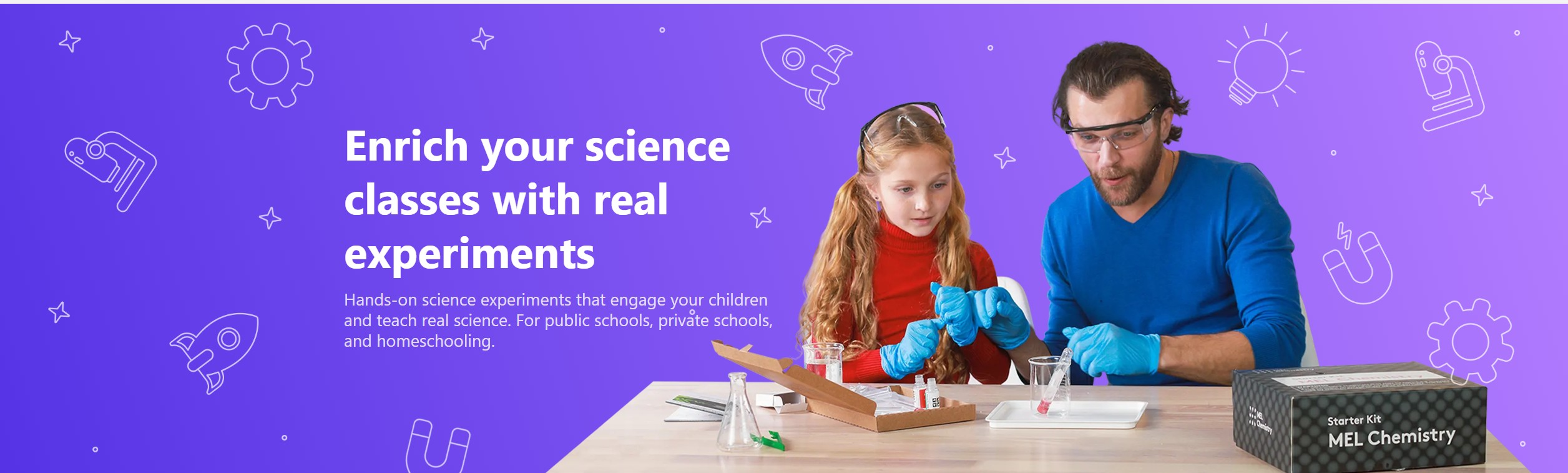
MEL Science Review 2026: Is It Worth It for Homeschool Families?
If you’re homeschooling (or just trying to keep a curious 8-year-old off screens), you’ve probably asked: “Is MEL Science actually worth the money?” After digging into their 100+ kits, testing the digital app, and comparing subscription tiers, here’s my honest take — including who it’s perfect for, who should skip it, and how it stacks up against KiwiCo and Groovy Lab.
What Is MEL Science? (Quick Overview)
MEL Science is a subscription-based science education platform that delivers monthly hands-on experiment kits to your door, paired with a mobile app featuring interactive video guides, virtual reality (VR) experiences, and augmented reality (AR) lessons.
Founded in 2015, it’s grown to serve over 3 million families worldwide. Unlike “craft box” competitors, MEL Science focuses on real science — think chemical reactions with actual reagents, physics models you can disassemble, and VR headsets that let kids “shrink down” inside a molecule.
Key stats:
- 100+ hands-on kits across 5 subjects
- 50+ digital experiences (VR, AR, video guides)
- Age range: 5+ (STEM), 8+ (Math/Physics), 10+ (Chemistry), 14+ (Medicine)
- Price: From $29.90/month, with annual plans offering up to 4 months free
- Safety: US CPSC compliant; EN 71-4 certified for chemistry sets
Subjects Breakdown
🔬 Chemistry (Ages 10+)
This is MEL’s flagship offering — and the one that gets the most buzz. Each kit includes real chemical reagents (not baking soda and vinegar every time), safety goggles, and step-by-step visual instructions via the app.
What you get: Experiments like “Tin Dendrites,” “Thermochromic Effects,” and “Electrolysis” — the kind of stuff that would normally require a school lab. The VR component lets kids “travel inside a molecule” to see atomic bonds forming in 3D.
Best for: Kids who’ve outgrown elementary “volcano” experiments and want real lab experience at home.
⚡ Physics (Ages 8+)
Physics kits focus on building working models of everyday devices — think electric motors, telegraphs, and hydraulic lifts. Each build is paired with VR explanations of the underlying physics principles.
Best for: Hands-on learners who need to build something to understand how it works. If your kid loves LEGO Technic, this is a natural next step.
Related: Our article on how black holes work pairs well with the physics kit’s “gravity” module.
🌱 STEM (Ages 5+)
The gentlest entry point. Kids assemble an eco-friendly microscope, launch digital space rockets from the couch, and learn through play. No open flames, no harsh chemicals — just curiosity-driven exploration.
Best for: Younger siblings, or families new to at-home science who want to test the waters before committing to Chemistry or Physics.
🔢 Math (Ages 8+)
Math kits are the newest addition. They use physical manipulatives + app-based challenges to make abstract concepts tangible. Geometry, fractions, and early algebra become hands-on puzzles rather than worksheets.
Best for: Kids who “hate math” because it feels abstract — the physical component makes it click.
🩺 Medicine (Ages 14+)
The most advanced track. Teens explore anatomy, genetics, and biochemistry through lab-style kits. Think “dissect a heart model” and “extract DNA from fruit” territory.
p>
Best for: High schoolers considering pre-med or biology majors.
Our Verdict: What We Loved (and What We Didn’t)
✅ What We Loved
- Real science, not craft projects. These aren’t “decorate a bookmark” boxes. Your kid is doing actual experiments with real reagents and tools.
- The app is genuinely good. Interactive video guides mean you don’t need to be a scientist parent to supervise. The app walks your kid through each step.
- VR/AR isn’t a gimmick. Being able to “stand inside” a molecule or “see” sound waves makes abstract concepts click instantly.
- Safety is taken seriously. Everything is CPSC-compliant. Goggles included. Instructions are visual and impossible to misinterpret.
- Flexible subscription. Pause anytime, cancel with one click. No lock-in.
❌ What We Didn’t
- Price adds up. $29.90/month is reasonable for what you get, but it’s not “impulse buy” territory for many families.
- Chemistry requires adult supervision. Even with safety measures, some experiments need a parent present. Not a “set it and leave” activity.
- International shipping can be slow. US orders are fine; outside the US, delivery times vary.
- No single-kit purchases. You can’t buy one kit to try before subscribing (though the 30-day trial helps).
Why It Works for Homeschool Families
If you’re homeschooling, MEL Science solves three specific problems:
- Lab access. Most homeschool families don’t have a chemistry lab. MEL ships one to your door every month.
- Curriculum gaps. The kits align with Next Generation Science Standards (NGSS), making them easy to slot into your existing curriculum.
- Parent expertise. You don’t need to be a scientist. The app + instructions do the teaching. You’re there for supervision and bonding, not lecturing.
Pro tip: Many homeschool co-ops split one subscription among 2–3 families (the kits are reusable if you order extra reagent packs). MEL also offers bulk/school orders at discounted rates.
Pricing & Plans (2026 Update)
| Plan | Price | Best For |
|---|---|---|
| Monthly | $29.90/mo | Try it out, cancel anytime |
| 3-Month | $89.70 ($29.90/mo) | Short-term commitment |
| Annual | $239.20/year (~$19.93/mo) | Best value — get 12 months for price of 8 |
| 2-Year | Contact for pricing | Dedicated homeschoolers |
Our recommendation: Start with the annual plan. At ~$19.93/month, it’s competitive with KiwiCo but delivers real lab science instead of craft projects. Plus, the 30-day trial means you can test it risk-free.
MEL Science vs KiwiCo vs Groovy Lab
| Feature | MEL Science | KiwiCo | Groovy Lab in a Box |
|---|---|---|---|
| Real chemicals | ✅ Yes | ❌ No (safe alternatives) | ⚠️ Limited |
| VR/AR included | ✅ Yes | ❌ No | ❌ No |
| Age range | 5–16+ | 0–18+ | 8–12 |
| Digital app | ✅ Interactive guides | ⚠️ Basic instructions | ⚠️ Printed only |
| Price (monthly) | $29.90 | $23.95 | $29.95 |
| NGSS aligned | ✅ Yes | ⚠️ Partial | ✅ Yes |
Bottom line: KiwiCo is broader (art, geography, etc.) but less rigorous on science. Groovy Lab is solid but lacks the digital/app component. MEL Science wins on depth and authenticity — if your priority is real science education, it’s the clear choice.
FAQ
Is MEL Science safe for home use?
Yes. All kits are tested in labs and certified child-friendly. Chemistry sets comply with US CPSC and EU EN 71-4 standards. Goggles and gloves included where needed.
Can I cancel or pause?
Yes, one-click pause/cancel in your account dashboard. No phone calls, no guilt trips.
What if my kid doesn’t like a kit?
You can swap subjects mid-subscription (e.g., switch from Chemistry to Physics). And with 100+ kits across 5 subjects, there’s something for every interest.
Is there a free trial?
MEL offers a 30-day trial on annual plans. Cancel within 30 days for a full refund.
Do they ship internationally?
Yes, to 50+ countries. US/UK/EU shipping is fastest; other regions may take 2–3 weeks.
Bottom Line & Where to Buy
MEL Science is the best “real lab” subscription box on the market in 2026. If you have a curious kid aged 8+ who’s ready for more than baking-soda volcanoes, this is the one to get.
The VR/AR component sets it apart from every competitor, the safety standards are genuinely impressive, and the annual plan (~$19.93/month) is a steal for what you get.
Ready to try it?
Get 12 months for the price of 8 with the annual plan. Cancel anytime.
Disclosure: ScienceBases may earn a commission when you purchase through links on this page, at no extra cost to you. Read our full disclosure.