What is bioluminescence? It is light produced by a chemical reaction inside a living organism — no heat, no electricity, no absorbed sunlight. It is genuinely “cold light,” and it is far more common than most people realize: the majority of deep-sea animals make it, and it evolved independently dozens of separate times.
The Basic Chemistry
Nearly every bioluminescent system uses the same two-part recipe:
- Luciferin — the light-emitting molecule (the fuel)
- Luciferase — the enzyme that drives the reaction (the engine)
Luciferase catalyzes the oxidation of luciferin, and that reaction releases energy as visible light. Different species use slightly different luciferins and very different luciferases, which is why the colors vary — though blue-green dominates, because those wavelengths travel farthest through seawater.
Oxygen is required in most systems, which is why firefly flashes pulse: they are controlling air supply to the light organ.
How Efficient Is It?
An incandescent bulb converts roughly 5% of its energy into light and 95% into heat. Bioluminescence is around 90-95% efficient — almost all of it becomes light, with essentially no heat. Nothing artificial comes close.
That near-perfect efficiency matters because the reaction is expensive. Making luciferin costs metabolic energy, so animals do not glow continuously — they flash, pulse, or release it as a cloud, only when it buys them something.
What It Is Actually For
| Use | How it works | Example |
|---|---|---|
| Counter-illumination | Match faint light from above to erase your silhouette | Hatchetfish, many squid |
| Lure | Dangle a glowing bait to attract prey | Anglerfish |
| Burglar alarm | Light up when attacked, drawing a bigger predator to your attacker | Dinoflagellates, some jellyfish |
| Mating signal | Species-specific flash patterns | Fireflies, ostracods |
| Smoke screen | Release a glowing cloud and vanish | Deep-sea shrimp |
| Warning | Advertise that you taste bad | Some millipedes, click beetles |
The “burglar alarm” is the cleverest. A dinoflagellate lit up by a predator’s approach makes the predator visible to something bigger. The original attacker now has reason to leave, and the dinoflagellate survives. It is defence by escalation.
Why Blue Dominates
Seawater absorbs red, orange, and yellow within the first few dozen meters. It absorbs green and blue least, which is why clear ocean looks blue and why deep-sea bioluminescence is overwhelmingly blue-green — those are the only wavelengths worth making down there.
Yellow and red bioluminescence exists but is rare and mostly in shallow or terrestrial species, where those wavelengths actually travel.
Where You Can See It
You do not need a submersible. A few reliable options:
- Dinoflagellate blooms — warm coastal water, usually summer, on dark beaches. Walk through the shallows or splash the water and it lights up blue. Best-known spots include Mosquito Bay in Vieques, Puerto Rico, and certain beaches in California, the Maldives, and Japan.
- Fireflies — warm humid summer evenings in North America, Europe, and Asia. Peak activity is usually the first hour after full dark.
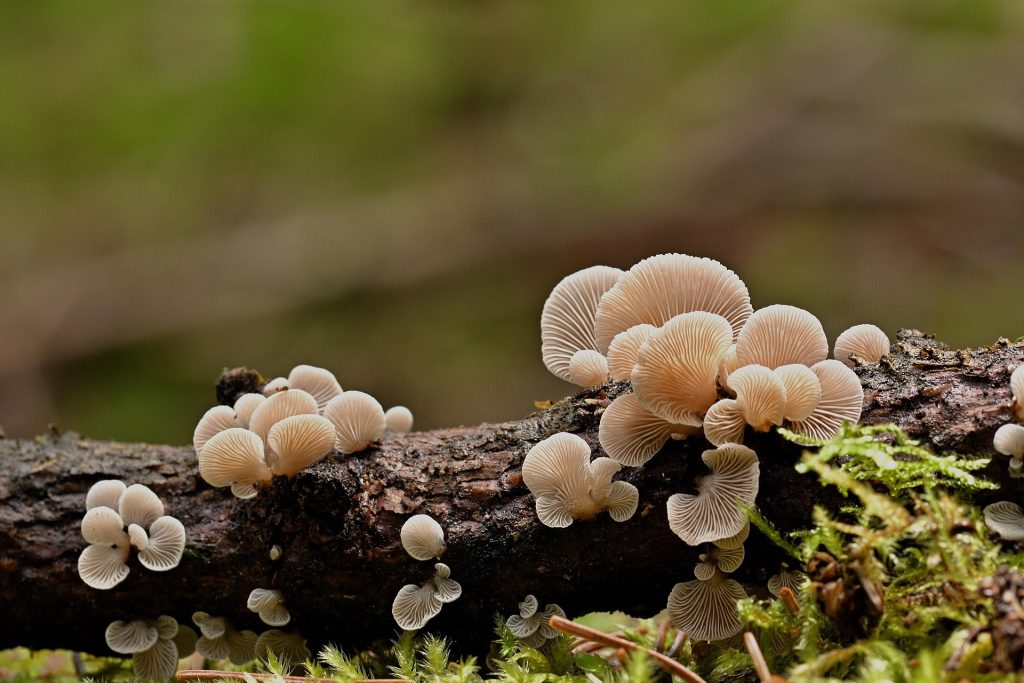
- Foxfire — some fungi glow faintly; look for rotting wood in humid forests at night. It is dim but real.
Timing matters more than location. New moon, no artificial lights nearby, and genuinely dark-adapted eyes (20 minutes minimum) make the difference between “I see nothing” and an unforgettable night.
How Humans Use It
So what is bioluminescence good for besides looking strange and beautiful? Quite a lot, as it turns out.
The luciferase genes are standard tools in molecular biology. Because they produce light on demand, researchers splice them into cells or organisms as reporters — if the gene switches on, the sample glows, so you can watch gene expression, track tumor cells, or detect bacterial contamination in real time. GFP (green fluorescent protein) from jellyfish, and the techniques built around it, earned a Nobel Prize.
The distinction worth keeping straight: bioluminescence makes its own light chemically; fluorescence absorbs light and re-emits it at a different color. GFP is the second one. People mix them up constantly.
Keep Exploring
- Why is the ocean salty? — the medium all this light travels through
- How do fish breathe? — life in the same deep water
- Quantum entanglement explained — light behaving oddly in general