A cow eats roughly 20 pounds of plant matter to put on one pound of body weight, and a person eating that cow gets back about a tenth of the energy the cow stored. By the fourth or fifth transfer there is so little energy left that supporting another level is not viable — which is why food chains are short, why there are vastly more grass plants than lions, and why the shape of that loss tells you something useful about any ecosystem you look at. Here is what is a food chain in one line: a queue with a leak in it.
The Short Answer
What is a food chain? A linear sequence showing who eats whom, with energy passing from one organism to the next. Grass, then grasshopper, then frog, then snake, then hawk is the textbook example. Each step is a trophic level, and each one loses most of the energy it receives.
The Trophic Levels
| Level | Name | What it is | Example |
|---|---|---|---|
| 1 | Producers | Make their own food from sunlight or chemicals | Grass, algae, phytoplankton |
| 2 | Primary consumers | Eat producers | Grasshopper, rabbit, zooplankton |
| 3 | Secondary consumers | Eat primary consumers | Frog, small fish |
| 4 | Tertiary consumers | Eat secondary consumers | Snake, tuna |
| 5 | Apex predators | No natural predators of their own | Hawk, orca, lion |
Where the Energy Goes
Only a fraction of the energy at one level makes it into the next. Most of it never gets eaten in the first place — roots, wood, and bones are left behind. Of what is eaten, a lot is indigestible and passes straight through. And everything that is absorbed gets spent on staying alive: moving, breathing, keeping warm.
Only the small remainder goes into growth and reproduction, and only that fraction is available to whatever eats next. The rule of thumb is about 10%, though real ecosystems range from roughly 2% to 20%.
Why Chains Are Short
Run the numbers. Start with 10,000 units of energy captured by plants. Primary consumers get about 1,000, secondary consumers 100, tertiary 10, and a fifth level 1. There is simply not enough left to support a sixth. This is also why large predators are rare and need huge territories — an orca sits four or five transfers away from the phytoplankton that ultimately feed it.
The same arithmetic explains why eating lower on the food chain uses less land. Feeding grain to cattle and then eating the cattle costs roughly ten times the agricultural area of eating the grain directly.
Food Webs Are the Honest Version
Almost nothing eats only one thing. A hawk eats snakes, mice, and frogs. Frogs eat a range of insects, not just grasshoppers. A food chain is a simplification pulled out of something messier.
That distinction matters more than it sounds: the chain is a teaching tool, the web is the reality. In a chain, removing one link collapses everything above it. In a web, predators usually have alternatives, so the system can absorb the loss. Webs with lots of redundant connections tend to be more stable; webs where one species is the only thing linking two halves are fragile at exactly that point.
The Trophic Cascade
Remove a top predator and the effects travel all the way down. When wolves were removed from Yellowstone, elk numbers rose and browsed the young willows and aspens along the streams down to almost nothing. Fewer streamside trees meant fewer beaver dams, less habitat for fish and amphibians, and more bank erosion.
Wolves were reintroduced starting in 1995 and the system shifted back — though how much of that is wolves specifically, rather than other changes over the same period, is still argued about. The clean lesson is narrower than the popular version: predators affect plants through the herbivores they eat, and removing them rearranges everything below.
The Level Everyone Forgets
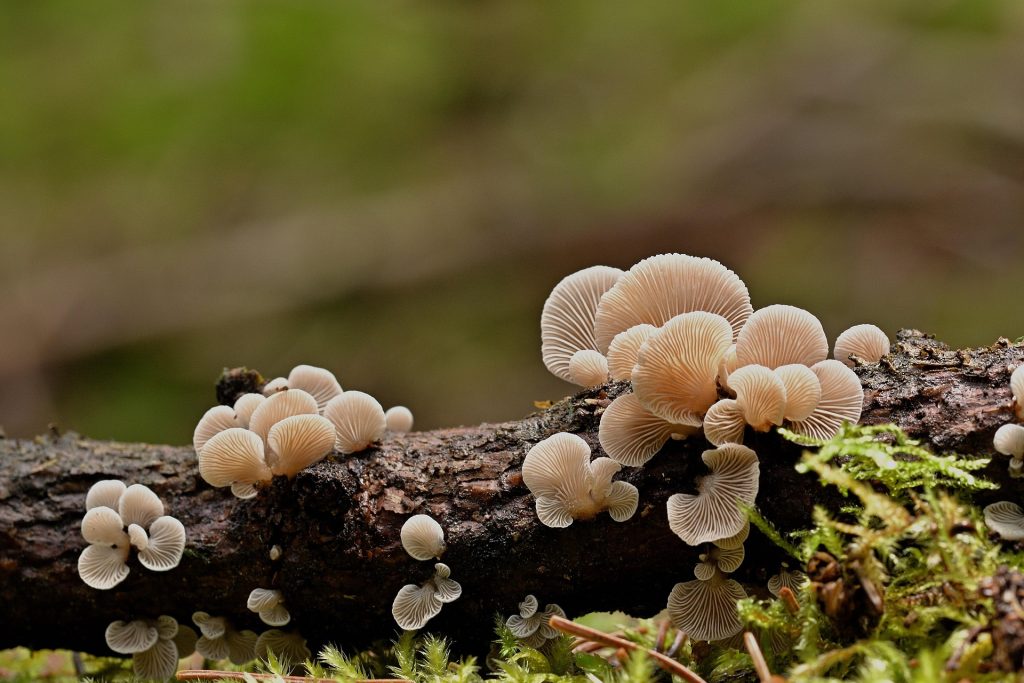
Decomposers — fungi, bacteria, detritivores — process dead material from every level and return nutrients to the soil, where producers take them up again. They are not usually drawn at the end of the chain because they are not at the end; they sit alongside all of it.
Almost all the energy in a forest passes through decomposers rather than through things getting eaten. A tree that dies and rots feeds vastly more life than one that gets browsed. Leave them out and the cycle never closes.
Keep Exploring
- What is natural selection? — why predators and prey keep reshaping each other
- Why do species go extinct? — when a whole link disappears
- How plants turn sunlight into food — where the energy enters in the first place