Disclosure: Some links on ScienceBases are affiliate links, which means we may earn a commission if you buy through them. That never changes what we recommend or how we score it — see “How we assessed this” below for the method behind every rating.
There is a price floor below which a lot of science products stop being useful, and knowing where it sits saves money. The best science kits under 50 dollars share a trait: they are either equipment with no fixed outcome, or a single activity done extremely well. What fails at this price is anything claiming breadth — a “100 experiment” kit for $29 is a hundred variations of the same fizz.
How we assessed this
Ratings here come from published specifications, the manufacturer’s own product and pricing pages, and recurring patterns in parent and educator feedback — not from boxes we unpacked ourselves. We have not purchased these kits or subscriptions, so we do not report first-hand results. Where something matters, we tell you what the actual evidence is: the age rating, the number of pieces, the materials listed, the price band, and what buyers say after the fact. We earn commissions on some links in this article; that never changes inclusion or ranking. Prices and line-ups move often, so confirm on the official site before you buy.
Where the Price Floor Actually Is
| Category | Good under $50? | Why |
|---|---|---|
| Circuits | Yes | Plastic modules are cheap and genuinely work |
| Geology and crystals | Yes | The raw material is inexpensive |
| Mechanics and marble runs | Yes | Cardboard and marbles are cheap |
| Compound microscopes | Marginal | $45 buys a usable scope, not a good one |
| Telescopes | No | Aperture costs money; save up or skip |
| Robotics and coding | No | The controller is the cost |
| Chemistry sets | Marginal | Fine for ages 6-9, thin above that |
That table is most of the value in this article. Below about $50, buy things made of cheap raw material, not things made of precision optics or silicon.
Our Picks
| Kit | Category | Age | Score | Price band |
|---|---|---|---|---|
| Break-open geodes set | Geology | 6-12 | 8.4/10 | $22-38 |
| Snap-together circuit set | Electricity | 8-12 | 8.3/10 | $28-45 |
| Chain-reaction marble run kit | Mechanics | 7-13 | 8.0/10 | $25-42 |
| Crystal growing kit | Chemistry | 6-10 | 7.4/10 | $15-25 |
| A digital kitchen scale and a stack of household experiments | Measurement | 8-14 | 8.6/10 | $15-28 |
Prices move week to week, and this is the bracket where discounts are steepest. Treat every range as a band, not a quote.
Best Overall: Break-Open Geodes
Twelve to fifteen whole geodes, a magnifier, eye protection, and an afternoon of genuine suspense. Nothing else at this price produces the same reaction, and the specimens are real rather than moulded.
Why it survives the price test: geodes are cheap raw material and the activity needs no electronics, no optics, and no precision parts. The entire cost is the rock.
Best for Repeated Use: Snap-Together Circuit Set
A grid of colour-coded modules and 100-300 projects, for roughly $30-45. It is the one category where the cheap version is nearly as good as the expensive one, because the expensive one just adds more modules.
It gets used for years if the child is between eight and twelve, and then it is genuinely finished. There is no upgrade path inside this format, which is fine at the price.
Best Non-Kit Purchase: A Digital Scale
This is the pick that surprises people. A 0.1 g digital scale costs about $15-25, and it unlocks the whole category of experiments where the answer is a number: density, evaporation rate, how much water a plant loses, whether a reaction conserves mass.
Kits teach activities; a scale teaches measurement, and measurement is what turns an activity into an experiment. Combined with free household activities, it beats most boxes in this price range.
What to Skip Under $50
- Telescopes. This is the clearest rule in the whole guide. Under $60 they are toys with mirrors, and a bad first look at the Moon ends the interest permanently.
- Compound microscopes at $25-35. Plastic lenses, no fine focus, and grey blurry circles.
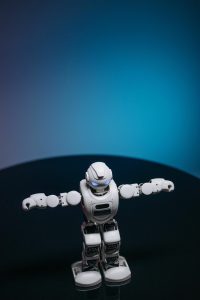
- Programmable robots. The cheap ones have abandoned apps and no community.
- Kits advertising 100+ experiments. Count the distinct activities, not the listed projects.
- Anything with a VR headset made of cardboard. It is a marketing prop.
Who Should Not Buy at This Price
Two groups should spend more or spend nothing, and being straight about it is the point of ranking the best science kits under 50 dollars.
- Parents of teenagers. A $40 kit reads as a toy to a fourteen-year-old and gets abandoned in a week. At that age, save for one real instrument.
- Anyone buying for a child who already has a cupboard of kits. Another one changes nothing. The constraint is attention, not inventory.
How to Get More Than You Paid For
- Free material first. A week of free kitchen experiments tells you which subject they actually like, and then the $40 goes to the right category.
- Prefer equipment over fixed-outcome kits. A magnifier, a scale, and a set of beakers support a hundred afternoons.
- Borrow the expensive things. Many libraries lend telescopes and microscopes, which is worth checking before spending anything.
- Buy the refill, not the box. If they already have a crystal kit, a bag of alum powder costs a few dollars and lasts a year.
Related Reading
- 15 science experiments at home — the free alternative, and mostly better
- Best rock and fossil kits for kids — our top budget category
- Best kitchen scales for experiments — the cheapest real instrument
- Best science kits for kids — the full, all-budget comparison
Disclosure: ScienceBases earns from qualifying purchases through affiliate links. We score independently, based on published specifications and manufacturer documentation. Our full method is explained under “How we assessed this” in each article.