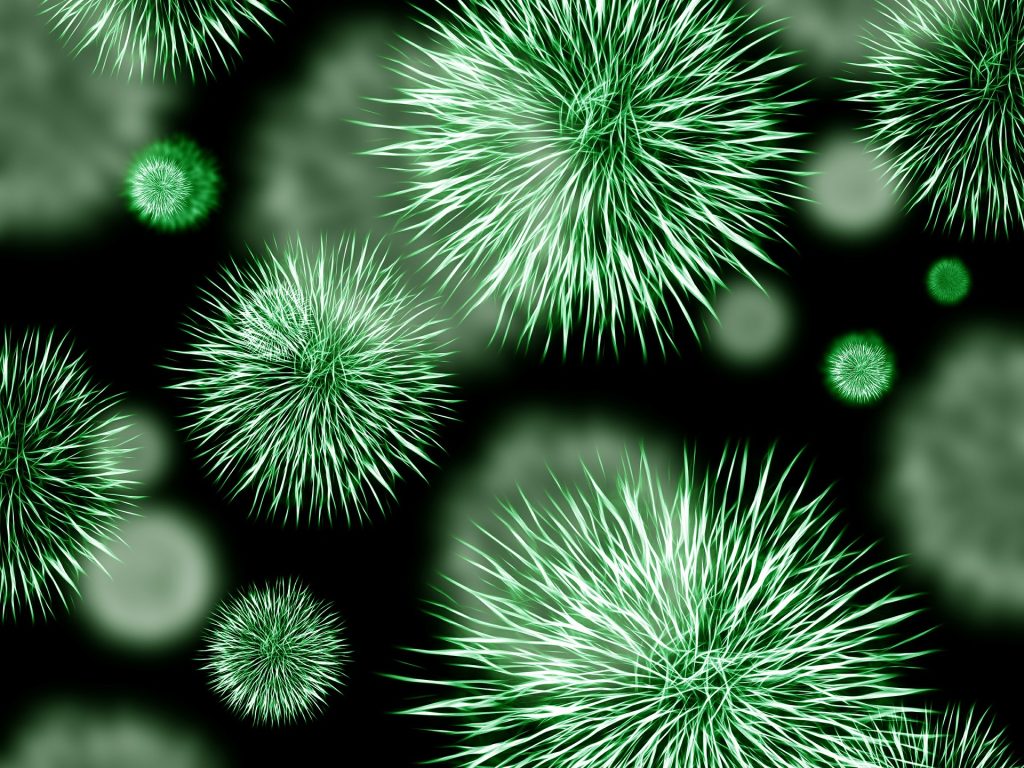
Antibiotic-resistant bacteria did not appear because bacteria needed to resist antibiotics. Resistant variants already existed by chance; the drug killed everything else and left them to multiply. That is the whole mechanism in one example. So what is natural selection, precisely? It is a filter, not a force — and once you see it that way, most of the confusion disappears.
The Short Answer
Natural selection happens whenever four conditions are met: individuals in a population vary, that variation is heritable, more offspring are produced than can survive, and some variants leave more descendants than others. When all four hold, the variants that reproduce best become more common over generations. That shift in frequency is evolution by natural selection.
The Four Requirements, One at a Time
| Condition | What it means | Example |
|---|---|---|
| Variation | Individuals differ | Beak depth varies among finches |
| Heritability | Differences pass to offspring | Beak depth is largely genetic |
| Overproduction | More young than survive | Thousands of eggs, few adults |
| Differential success | Some leave more offspring | Deep beaks crack drought-hardened seeds |
Break any one of the four and selection stops. Variation without heritability produces nothing lasting. Heritable variation with no competition for resources produces drift instead.
Worked Example: The Peppered Moth
Before the Industrial Revolution, most peppered moths in England were light-coloured, which hid them against lichen-covered trees. Dark variants existed but were rare and got eaten. As soot killed the lichen and blackened the bark, the advantage flipped: dark moths became harder for birds to spot, survived, and bred. By 1900 dark moths made up the large majority in industrial areas.
After clean-air legislation in the 1950s and 1960s, the trend reversed and light moths returned to dominance. The population changed twice, in opposite directions, because the environment changed twice. The classic experiments were done by Bernard Kettlewell in the 1950s, and later re-analysis has criticised parts of his method — but the underlying pattern of industrial melanism is well documented across many species, not just this one.
A Case You Can Watch in Real Time
Peter and Rosemary Grant spent decades measuring finches on Daphne Major, a small island in the Galápagos. Starting in 1973 they banded, weighed, and measured thousands of birds. When a severe drought hit in 1977, small soft seeds vanished, leaving large hard ones. Birds with deeper beaks could crack them; birds with smaller beaks could not. The average beak depth in the population increased measurably in a single generation.
Then heavy rains in the 1980s favoured small seeds, and average beak size shifted back down. Selection was visible, directional, and reversible, all inside a human lifetime.
What It Is Not
It is not random. Mutation — where new variation comes from — is random with respect to need. Selection is the opposite of random: it is a consistent, non-random filter that preserves what works.
It does not have a goal. There is no ladder, no progress, no endpoint. A parasite that loses its digestive system because it lives in a host’s gut is not devolving; it is adapting to its actual circumstances. Selection favours what reproduces now, which is often simpler rather than more complex.
It does not produce perfection. It works only with variation that happens to exist, and it is constrained by history. The vertebrate eye has a blind spot because the optic nerve exits in front of the retina — a cephalopod eye, built the other way around, does not. Both work; neither is optimal.
How Long Does It Take?
That depends entirely on generation time and selection strength, which is the practical version of what is natural selection: fast when generations are short and pressure is strong, slow when they are not. Bacteria can double in 20 minutes, so resistance spreads in days. The Grants’ finches shifted in one generation. Large mammals with multi-year generations may need thousands of years for comparable change.
A useful caution: the fossil record is dominated by long periods of little change punctuated by bursts of rapid change. That pattern — punctuated equilibrium, proposed by Niles Eldredge and Stephen Jay Gould in 1972 — is debated in its details, but the basic observation that rates vary enormously is well supported.
Keep Exploring
- Why do species go extinct? — what happens when the filter wins
- What is a food chain? — the network selection operates inside
- How does DNA work? — where heritable variation comes from
2 thoughts on “What Is Natural Selection? Four Conditions and a Lot of Misunderstandings”