In 1987 a Japanese researcher named Yoshizumi Ishino was sequencing a gene in E. coli when he found a strange pattern: a short sequence repeated five times, with unrelated stretches of DNA in between. Nobody knew what it did. It turned out to be part of a bacterial immune system, and roughly 25 years later it became the most useful tool in biology. What is crispr in practice? A way to cut DNA at an address you choose, so the cell’s own repair machinery rewrites the code for you.
The Short Answer
CRISPR stands for Clustered Regularly Interspaced Short Palindromic Repeats — the repeated sequences Ishino found. The system borrows two things from bacteria: a protein that cuts DNA, usually Cas9, and a guide RNA that tells it where to cut. Change the guide RNA and you change the target address. That is why it is programmable, and why it spread through labs within a couple of years.
Bacteria Fighting Viruses
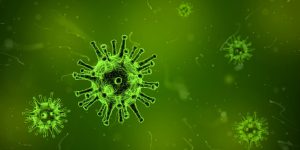
Bacteria are under constant attack from bacteriophages — viruses that inject their DNA and hijack the cell. When a bacterium survives an infection, it keeps a fragment of the invader’s genetic sequence and files it between the repeats. That archive is the CRISPR array: a record of every virus the lineage has survived.
When the same virus shows up again, the bacterium transcribes those stored fragments into RNA. Any RNA that finds a matching sequence latches onto it, and the Cas protein cuts — disabling the invader before it can replicate. Francisco Mojica identified the immune function around 2005; the acronym itself was coined in 2002.
What Cas9 Actually Does
The enzyme unwinds the double helix and tests the DNA against its guide RNA, about 20 letters at a time. A perfect match triggers the cut. A nearby short sequence called the PAM site has to be present too — without it, Cas9 will not cut even if the guide matches, which is one reason the enzyme does not slice up the bacterial genome storing the archive.
Mismatches matter. Cas9 tolerates some, which means it can cut in unintended places. Off-target effects are the central technical concern in therapeutic applications, and measuring them properly is still an active problem.
Where the Editing Happens
The cut is only half the job. A clean break across both strands is catastrophic for a cell, so it repairs immediately, by one of two routes:
- Non-homologous end joining — fast and sloppy. It often inserts or deletes a few letters, which usually disrupts the gene. This is how you knock a gene out.
- Homology-directed repair — uses a template. Supply a corrected DNA sequence alongside the cut and the cell may copy it in. This is how you fix a gene precisely.
The second route is much less efficient and works mainly in dividing cells. A lot of current engineering effort goes into making it the default rather than the exception.
Base and Prime Editing
Cas9 makes a double-strand break, which gives the cell enormous latitude in how it repairs. Newer tools avoid the break. Base editors chemically convert one letter into another — a C into a T, say — without cutting both strands. Prime editing uses a modified Cas9 fused to a reverse transcriptase to write a new sequence directly into the site.
Both are more precise for the specific jobs they handle and less useful for others. They are complementary tools, not replacements.
What Is Approved
| Treatment | Target | Status |
|---|---|---|
| Casgevy (exa-cel) | Sickle cell disease, beta thalassemia | Approved in the UK in November 2023 and the US in December 2023 |
| Ex vivo cell therapies | Cancer, blood disorders | In clinical trials |
| In vivo liver-targeted editors | Transthyretin amyloidosis | Late-stage trials with encouraging reported results |
The approved therapies edit cells outside the body, then put them back. That sidesteps the hardest problem: getting the editor into the right cells inside a living person.
The Germline Question
Editing a patient’s blood stem cells affects only that patient. Editing an embryo affects every cell of the resulting person and is passed to their children. In 2018 He Jiankui announced the birth of twin girls whose embryos he had edited to resist HIV. He was sentenced to three years in prison in China in 2019 and was condemned by the scientific community.
That is where the question of what is crispr ultimately for becomes unavoidable: editing a patient’s own cells is medicine, while editing an embryo changes what gets inherited. The technical case against the latter is straightforward — off-target effects, mosaicism, and no way to know the consequences in advance. The ethical case is separate and unresolved. Heritable human genome editing is prohibited or unregulated in most countries, and an international commission concluded in 2020 that the safety thresholds have not remotely been met.
Keep Exploring
- How does DNA work? — the molecule being edited
- What is mRNA technology? — the other platform everyone talks about
- 5 science myths that refuse to die — designer babies are a favourite